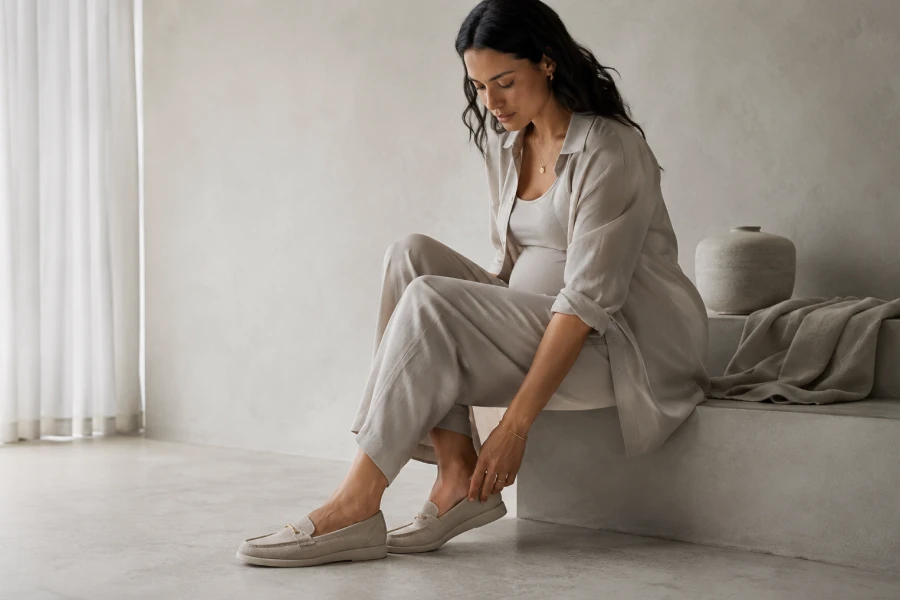
Pregnancy changes familiar routines long before it changes your wardrobe. Feet can feel fuller, warmer, and more sensitive by late afternoon. The need for pregnancy shoes for swollen feet becomes especially clear during busy workdays. A pair that felt fine in the morning may suddenly feel restrictive. That discomfort can affect errands, exercise, commuting, and simple moments at home. The answer is not buying the largest size available. Instead, comfort comes from thoughtful structure, adaptable materials, and realistic daily planning. Small fit decisions can protect your energy when every step already feels more demanding. A shoe wardrobe should make movement easier rather than adding another challenge. The right approach gives your changing body room to move with confidence.
Extra space matters, but support still deserves equal attention. Loose shoes without structure can make tired feet work harder. Look for uppers that adapt gently without pinching across the widest areas. Flexible materials often feel better than stiff leather during unpredictable swelling. At the same time, a secure heel helps prevent sliding with every step. Consider pregnancy comfort shoes that balance softness with a stable base. A roomy toe area lets toes spread naturally throughout the day. Adjustable straps can provide a more customized fit than fixed laces. Cushioning should absorb impact without making the shoe feel unstable. These practical details create comfort that lasts beyond the first few minutes.
Your feet usually give useful feedback before discomfort becomes intense. A tight band across the top signals that the upper needs more flexibility. Deep sock marks may suggest that your shoes feel too restrictive later. Heel rubbing can mean the foot is shifting because the shape no longer fits well. Pay attention to how footwear feels after a walk, not only when standing still. Try roomier toe-box options when your front foot feels compressed. Notice whether one foot swells more than the other. Keep several dependable pairs available instead of relying on one favorite style. Rotating footwear also helps materials recover between wears. This kind of observation makes shoe shopping far more intentional.
Daily movement does not need to feel like a test of endurance. A supportive pair should make a grocery run feel manageable. It should also help you move through a workday without constantly readjusting. Low heels or flat soles often feel more dependable than elevated styles. However, completely flat shoes still need enough cushioning and arch support. Choose stable everyday soles that keep your footing secure on different surfaces. Avoid narrow shapes that force your weight into one area. A wider base can feel especially reassuring when balance starts to shift. Shoes should encourage an easy stride rather than a cautious shuffle. Comfortable movement can make the day feel noticeably less demanding.
One pair rarely serves every part of a changing pregnancy routine. A casual slip-on may work beautifully for errands and appointments. A supportive sneaker can be more useful for longer walks or commuting. Softer sandals may feel welcome at home during warmer months. Keep workwear needs in mind before replacing every shoe you own. Neutral colors often make practical shoes easier to wear repeatedly. Try pairs on later in the day when swelling is more likely. Bring the socks or hosiery you usually wear with that style. Make sure straps, seams, and closures feel comfortable from every angle. A versatile rotation gives you options without making your closet feel cluttered.
Comfort does not require abandoning a personal sense of style. Clean sneakers can look polished with relaxed trousers or knit dresses. Soft loafers may work well with office-friendly layers and tailored separates. Minimal sandals can feel elegant with flowing skirts during warm weather. Focus on color, texture, and proportion instead of difficult shoe shapes. A simple shoe often looks more refined than one overloaded with details. Try matching your footwear to the mood of your outfit. A streamlined silhouette creates visual ease even when the sole is practical. The best pair supports your body while still feeling recognizably yours. Style becomes easier when comfort is already handled.
Good footwear can become a small but meaningful form of daily support. Start each morning with the pair that matches your schedule. Switch styles when your plans change instead of forcing one shoe through everything. Give your feet a break whenever you sit for longer periods. Keep your most comfortable options near the door for easy access. Review fit regularly because needs can change from month to month. Replace worn insoles before the shoe loses its usefulness. Prioritize relief over trends that only work in photos. Your daily choices should protect energy for the moments that matter most. When shoes fit well, the rest of your routine often feels more manageable.



Leave a comment