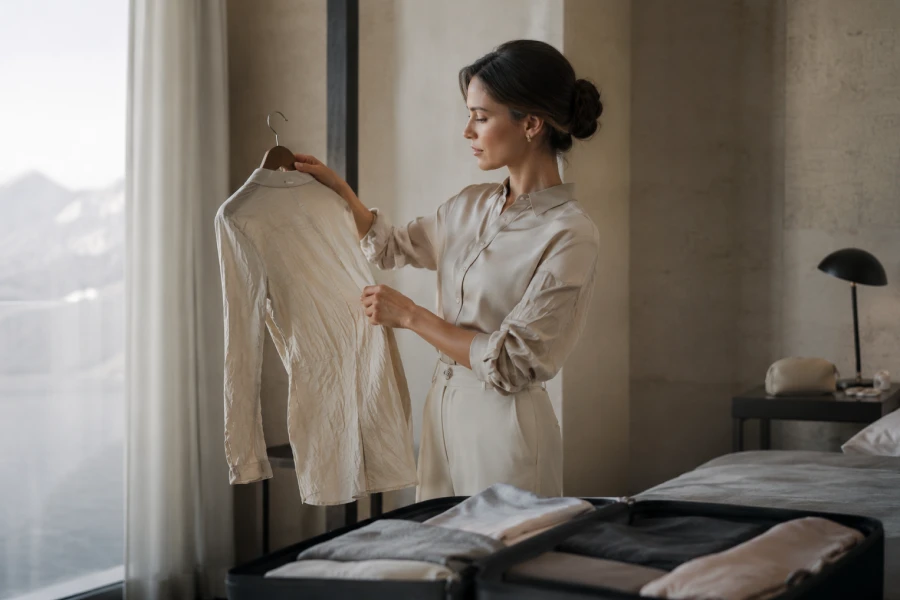
Travel can leave even the most carefully packed outfit covered in creases. Hotel closets, carry-on bags, and quick changes do not always help. Knowing how to unwrinkle clothes while traveling makes it easier to arrive feeling prepared. It also keeps your wardrobe useful when you have limited space. A few smart choices before departure can reduce the need for last-minute fixes. The rest comes down to using your surroundings strategically. You can smooth many fabrics without carrying an iron or bulky tools. The goal is not a dry-cleaned finish in every setting. Instead, aim for clothing that looks fresh, relaxed, and ready to wear. That approach protects both your time and your travel mood.
Better results often start with the way you pack. Choose fabrics that recover well after folding or rolling. Knitwear, jersey, and textured materials usually hide minor creases more easily. Place heavier pieces at the bottom of your bag for stability. Fold tailored items around softer garments whenever possible. Use travel garment care habits that protect your clothing before transit begins. Avoid making extremely tight rolls with structured fabrics. Put delicate items inside a smooth protective layer. Leave a little room so garments are not compressed under pressure. Packing with intention makes arrival-day styling far simpler.
Unpacking immediately gives wrinkles less time to settle. Hang dresses, shirts, and jackets as soon as you reach your room. Use the bathroom door or shower rod if closet space is limited. Smooth the shoulders, seams, and hems with clean hands. Let gravity work while you shower, rest, or prepare for your plans. Avoid stacking freshly unpacked garments on a chair or bed. Keep pieces separated so air can circulate around them. Fasten buttons to help shirts hold their intended shape. Lay knitwear flat if hangers might stretch it. A few quiet minutes can make a visible difference.
Hotel spaces often provide everything you need for a gentle refresh. Hang a garment in the bathroom while warm shower steam fills the room. Keep it away from direct water and heavy condensation. Smooth the fabric occasionally as it begins to relax. A clean, slightly damp towel can help soften stubborn areas. Try packable fabric solutions when your schedule requires a fast reset. You can also use a hair dryer on low heat from a safe distance. Move the airflow continuously to avoid overheating one spot. Always check fabric care instructions before adding heat. Gentle methods often create the most natural-looking results.
Some silhouettes look better when they feel slightly relaxed. Flowing dresses can hide light creases within their natural movement. Wide-leg trousers often recover well once they hang properly. Textured tops can make small wrinkles nearly invisible. Consider layering with a soft jacket or open shirt when needed. Scarves and accessories can draw attention toward intentional details. Avoid overly crisp fabrics on days with long transit. Keep one simple backup outfit for important reservations or meetings. Choose colors and prints that feel forgiving in photographs. Smart styling lets you enjoy your plans instead of monitoring every crease.
Evening plans usually require a little more structure and polish. Begin refreshing your outfit well before you need to leave. Focus on visible areas like collars, fronts, waistlines, and sleeves. Let the garment rest while you complete hair or makeup. Use a mirror in natural light to check the overall drape. Build a polished travel wardrobe around pieces that still look good after movement. A slightly relaxed fabric can feel sophisticated when styled intentionally. Add one finished element, such as a clean shoe or structured bag. Keep accessories simple so the outfit feels balanced. Preparation turns travel clothing into an easy part of the experience.
Travel dressing feels calmer when you know what works. Keep a small packing list for clothing care essentials. Include a travel-size spray bottle if your accommodations allow it. Choose garments that fit your destination and your packing style. Unpack as soon as possible after every arrival. Hang tomorrow’s outfit before you go to sleep. Set aside anything that needs extra time to relax. Resist overpacking because fewer items give every garment more room. Repeat the same simple routine on each trip. A little preparation helps your clothes feel ready wherever you land.



Leave a comment